
Danville ADU
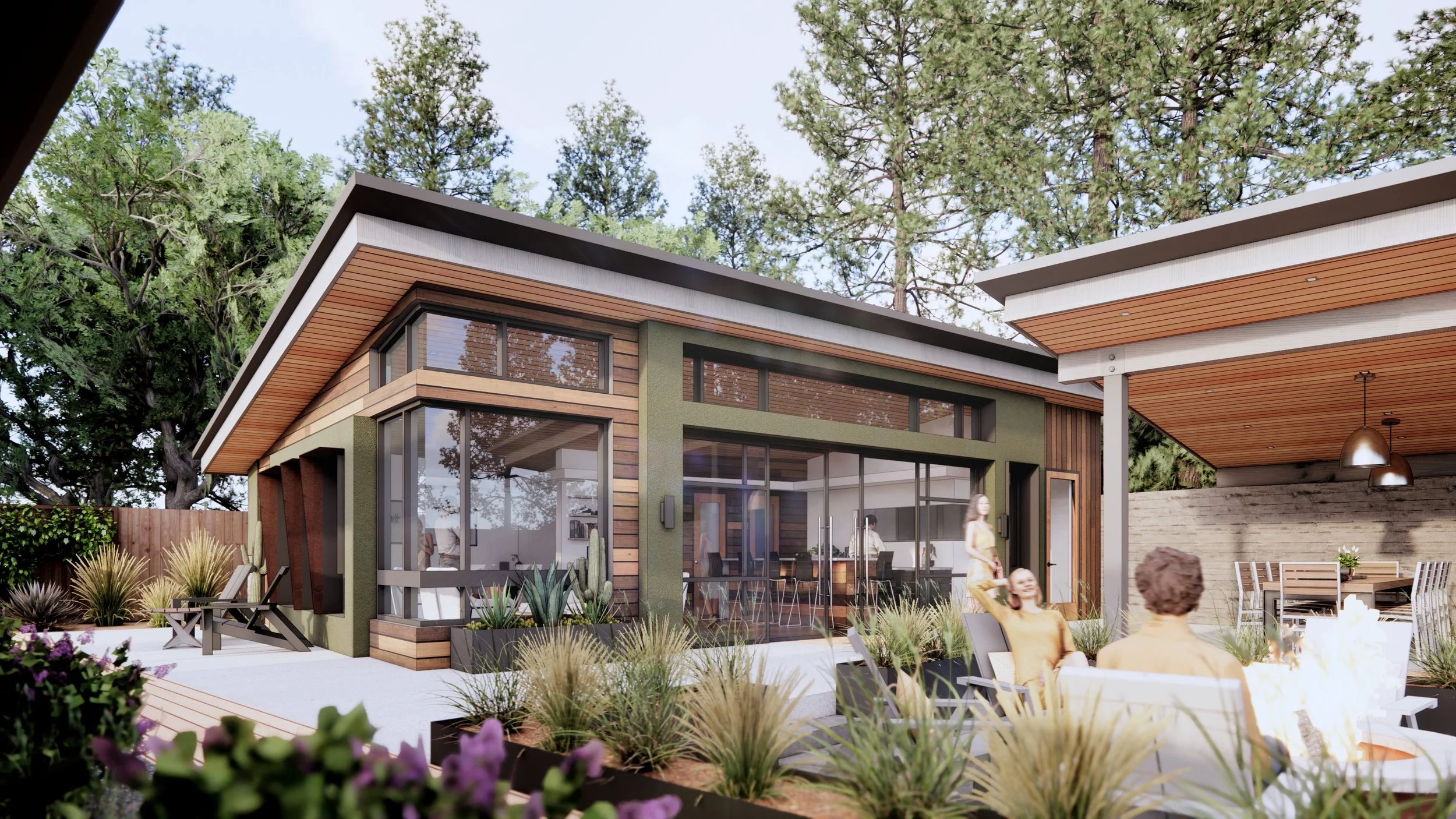
This ADU explores how small-scale residential development can make better use of existing suburban sites while creating a more flexible and connected way of living. In Danville, where traditional single-family development and large lots have long defined the character of the community, the project demonstrates how an ADU can introduce greater density without compromising the quality, privacy, or character of its surroundings.
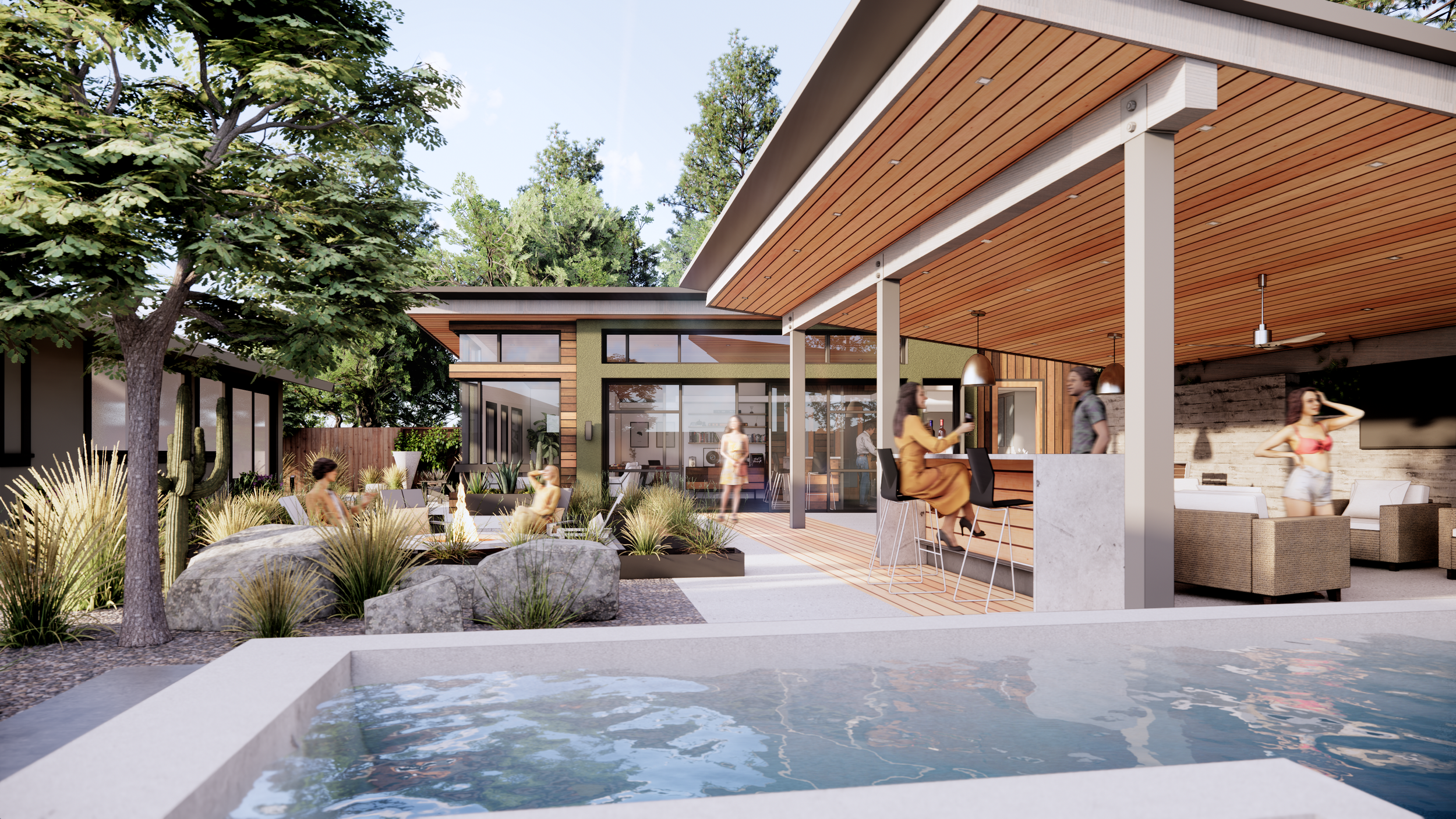
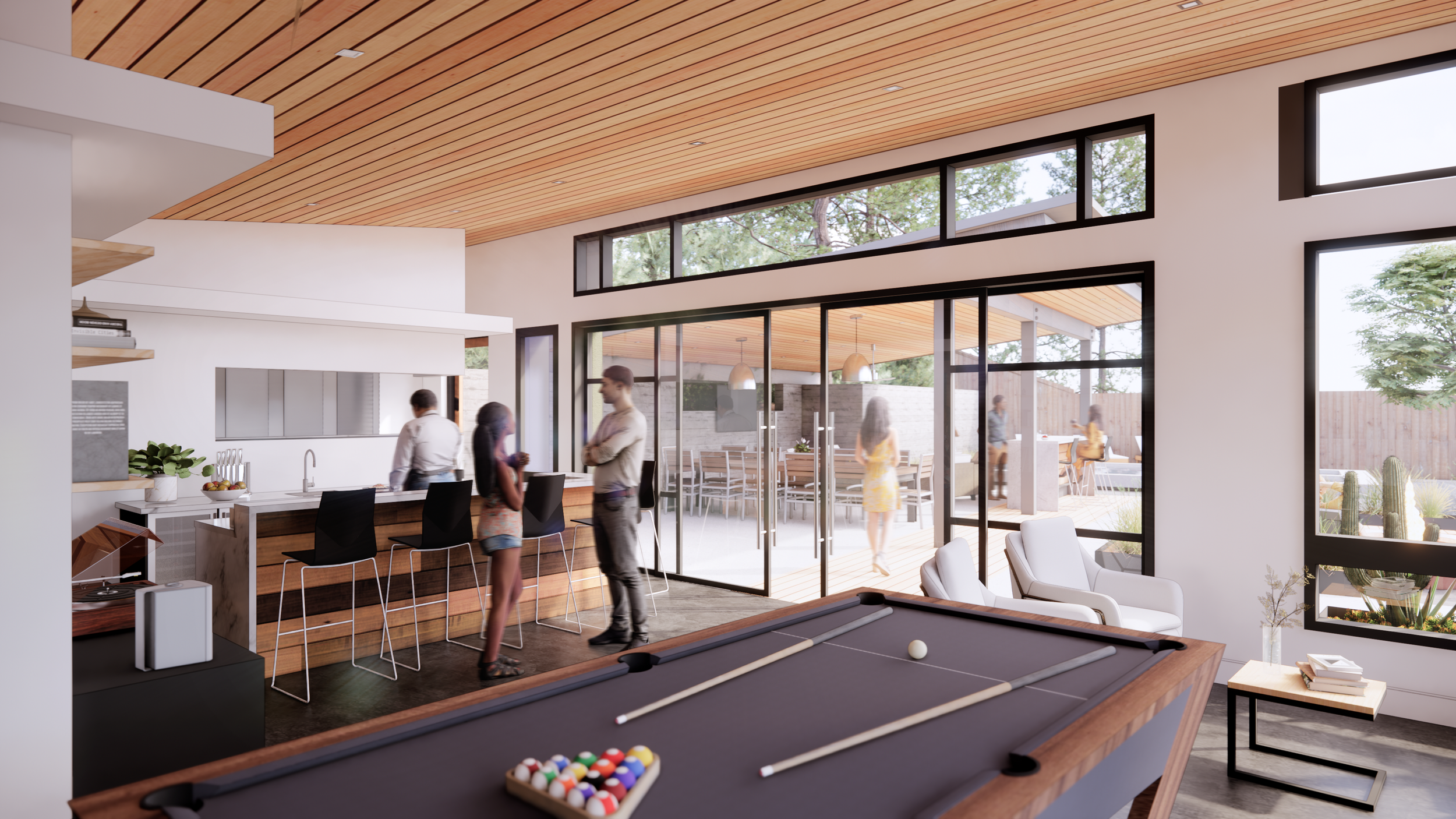
Rather than treating the ADU as a separate backyard structure, the design considers the entire property as a small residential community. The relationship between the main house, ADU, landscape, and outdoor spaces creates opportunities for intergenerational living, extended family, guests, rental use, and gatherings with friends and neighbors. Its position within the hillside and its modest scale help the ADU feel integrated into the site rather than simply added to it.
The project also looks at how thoughtful design can make suburban development more efficient and sustainable. By adding housing to an existing residential property, the ADU increases the usefulness of an already-developed site without requiring new land to be developed. Native landscaping, water collection, on-site renewable energy, deep overhangs, earth sheltering, and abundant natural light and ventilation reduce resource use while improving comfort and connection to the outdoors.
The building’s modulating façade gives individual materials and details a distinct presence while creating a cohesive overall composition. Locally sourced materials and durable construction reinforce a commitment to quality and longevity, offering an alternative to the quick and inexpensive construction often associated with suburban development.
The project demonstrates how an ADU can be more than an additional dwelling. It can provide new housing opportunities, support changing family structures, make better use of existing land, and strengthen connections between people and their surroundings. With passive design strategies and a photovoltaic array, the project is designed to achieve predicted net-zero energy use and operational carbon, creating a more resilient and sustainable model for suburban infill.